What I learned researching rumination surprised me.
Have you ever gone through an entire day where the same troubling thought kept unrelentingly popping into your head?
Maybe you’re driving somewhere familiar, and suddenly you’re pulling into your destination with only a vague memory of the drive. Your mind wasn’t really on the road; instead, it was replaying a conversation from earlier in the day.
Later, that same conversation returns while you are walking the dog, folding laundry, and making dinner.
Maybe you’re trying to understand why the other person seemed angry with you, or you’re upset with yourself because you wish you’d said or done something differently. Or both.
Before long, realize hours — or days — have passed and your mind is still repeating that same conversation.
Like me, you may find yourself wondering: Why does my mind keep replaying the same reels?
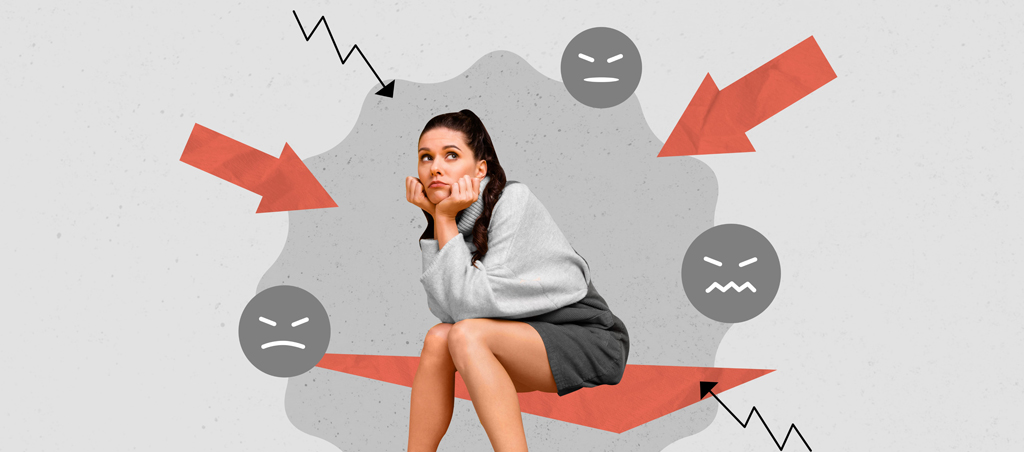
What you’re experiencing is called rumination.
What Is Rumination?
Rumination is the tendency to repeatedly think about the same distressing thought, conversation, or problem without reaching a resolution.
Instead of helping us solve a problem, rumination keeps us stuck in the same thought spirals, replaying the same situation over and over again. As our mind rehashes details, worry, self-criticism, and resentment grow.
We can ruminate over seemingly harmless everyday scenarios:
- a comment your partner made earlier today
- a conversation with a friend that went sideways
- An argument with your teenager that’s still unresolved
- something you said to a neighbor that now feels awkward
- a medical issue or physical symptom that’s worrying you
It is entirely normal to reflect back on a bad experience or to worry about the future. But when does reflecting too long become harmful to you? And how do we stop our ruminating thoughts?
Why Rumination Feels Productive
At first, ruminating can seem productive. We tell ourselves that if we just rethink it all one more time — turn it over from a slightly different angle — we’ll finally understand what happened, figure out what we can do to fix the situation, or finally understand why someone acted the way they did.
So your mind keeps rehashing events in hopes of finding clarity. But instead of resolution or understanding, rumination leads to more confusion, self-doubt, and high stress.
The Effects of Rumination
Research shows that rumination can have a negative impact on our mental and emotional well-being.
Over time, chronic rumination can:
- Lower overall mood.
- Increase anxiety and depression.
- Affect memory and concentration.
- Intensify self-criticism.
- Make us more judgmental toward others.
- Strain relationships.
Instead of helping us move forward, rumination holds us back.
It’s mentally exhausting and bad for our health.
Why So Many of Us Are Ruminating More
According to scientists who study mental health, most of us are ruminating more than we ever have before. It’s no wonder, really.
In modern life, our brains are processing far more emotional input than they were designed to handle.
It’s not surprising that our mind tries to regain control by overthinking.
Rumination, in many ways, is the brain’s attempt to make sense of complex emotional experiences.
But when those thought loops get stuck, they can keep us from living our own lives with agency and emotional freedom.
How Do You Stop Ruminating Thoughts?
The good news is that you can learn to recognize your negative thought loops, untangle them, and reshape how your brain responds.
With awareness and practice, it’s possible to:
- recognize when rumination is beginning.
- relate to our thoughts with more curiosity.
- interrupt the loop before it becomes consuming.
- develop far healthier and more effective ways of processing difficult emotions.
Over time, these small shifts can change how the brain responds to stress and uncertainty.
Instead of getting trapped in repetitive thoughts, you regain a sense of control so your mind works for you, not against you.
Exploring Rumination Further
In my latest Substack article, I share eight things that surprised me while researching rumination — including the #1 thing we all ruminate about.
I think you might find it surprising, too.
Over the next few months, I’ll be diving deeper into the science of rumination — why it happens, how it reshapes the brain, and the practical strategies we can use to interrupt and transform these thought spirals.
I hope you follow along on my Substack.
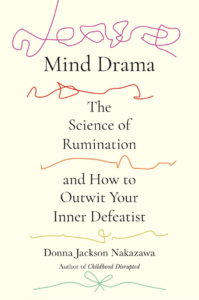
This work is also at the heart of my upcoming book Mind Drama, available May 2026.
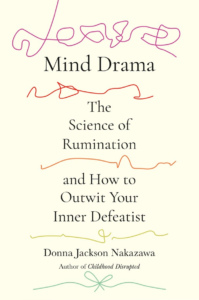
I’m deeply honored that Oprah Daily has already named it one of the Top 10 Books to Help You Make Changes That Stick in 2026.
This book has been years in the making, and I cannot wait to place it in your hands.
More soon.
And as always, I’m grateful you’re here.
We heal together💖
Donna
✨MY BOOKS:
- Mind Drama – Available for Preorder
- The Adverse Experiences Guided Journal
- Girls on the Brink
- The Angel and the Assassin
- Childhood Disrupted
✨MY COURSE: Breaking Free from Trauma